Sunday, July 27, 2025

Final Post

Throughout my whole time here at Summer Advantage, to say it has been a ride would be an understatement. I was talking with my grandpa as soon as I got back home, going over everything, and we said that the knowledge that I got from this whole time was not just in the classroom, but the connections that I made throughout my time here, the people I've met, and the doors that will open up for me in the future. I am beyond grateful for everything that has happened because it made me just that much more knowledgeable in the classroom, but also more importantly, in the world.

In the classroom, we've covered a lot in such a short 4-week time frame with two-and-a-half-hour classes, and the fact that we did not even need the whole time to do something good. The reason for this was A.I.—it has CHANGED THE GAME. Where before the time of A.I., the assignments that we did would not only not have been as good as they came out to be, but also it would have had us up at all hours of the night trying to accomplish the assignments, and we wouldn't have been able to do the same amount of work that we were able to.

My best experience with A.I. was making the scripts. I was able to give it a prompt and build off of it. For example, my Abraham Lincoln Address to the town hall—I was able to say to Claude, "Give me all the background and influences of Abe Lincoln; list all of the things that he did against slavery." Once I put that in, I was able to "reply" to Claude and put the assignment details into it, saying, "Compose a script in which you step into the person's shoes and speak for them. Think and write in terms of the first-person 'I'—imagine yourself addressing an audience, introducing yourself and making your feelings known about slavery, take the side against slavery. Be persuasive. State your case with passion. Try to win over followers to your cause: either the need to preserve the 'curious institution' of slavery for all time—or the need to bury it in the dust bin of history forever." This was able to put out a script that was around four and a half minutes long. This was perfect and one of my best presentations yet.

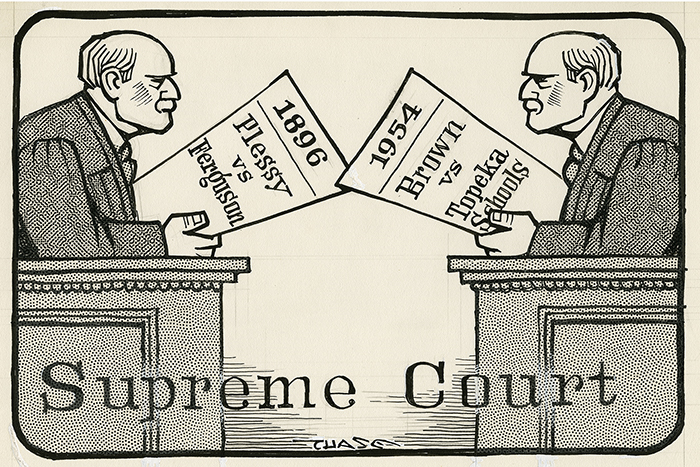
This also went hand in hand with the mock trials, where in my final presentation I talked about how A.I. is great for taking emotion out of the equation. People in the room know that it is not your words but the words of others and the computer that is able to provide accurate info that does not affect anyone listening because it is, for one, based in a different time when things were considered "right," and also allows me to feel more comfortable presenting something like Plessy v. Ferguson and trying to argue for "separate but equal."

As for the blog posts, those were amazing compared to very long papers that you do a ton of research on and end up not really paying close attention to the details of, losing the purpose of doing the paper in the first place. I think that doing the blog posts allowed me to really sit there and take in what I was saying rather than looking through a bunch of stuff to have it try to make sense and not really comprehend it in the way that it should have been.

We also did hybrid work with A.I. in the blog posts where we were able to use them for speeches and research. There were surveys taken that said students are much more likely to read what comes out of A.I. because of the easy accessibility that it gives you, and for kids nowadays, after COVID, the attention span of people and mostly young adults is very little because of that gap in our lives for almost 2 years. There was key development that was lost in that time. This is how A.I., I believe, has combated that. It gave us the ability to reflect on the things that we did learn from the A.I., showing us that we will need to embrace it rather than neglect the very valuable tool we now ALL have at our disposal.

Lastly, I want to say thank you to Professor Smith for being the most honest and straightforward teacher that I have ever had, giving me advice and tools that I will without a doubt be taking. And secondly, I want to thank all of the students in this class for making it that much more enjoyable through the debates and the projects.

Peace, Love, and use your turn signals!!


AI Disclaimer -- used for punctuation and spelling. 

Saturday, July 26, 2025

In The Heat of The Night

 Watching "In The Heat of The Night," it seems as if the whole movie was made around dismantling the lie of separate but equal. It talks strongly in the sense that the law may say one thing, but the people feel another way—something that no law can change. Especially when the law does not agree with the law, choosing not to enforce it.

The Supreme Court's promise in Plessy v. Ferguson gave a cruel statement when they said separate but equal. They created a divide in the whole nation because, like the talk we had in class is, where does it stop? What happens when someone is mixed or a Mexican American? What is the classification end? This law knew no end and was up to the discretion of people with hate-filled hearts, like in the movie.

Throughout the whole movie, there were times where all of the cops hated the fact that the detective was down there and wanted to find anything they could on him to send him back or send him to jail. They took this opportunity when they said that he was holding evidence. They did not care to hear him out. Rather, they just wanted to lock him up in a cell and demoralize him when he was the smartest one in the room. This happened again when they first examined the body. The white doctor did not know everything that he was talking about, but the detective made groundbreaking discoveries on the real time of death. This was one of the first times that the officers felt inferior.

Moving past all of the ugliness "The Heat of The Night" exposes, the film left me with a semi-positive feeling. Not because racism is solved by the end—because we know that it clearly isn't. But because change, however slow and painful, it is finally proven to be possible to have improvement. Tibbs and Gillespie's handshake at the train station isn't a happily ever after; it's a beginning. It's two men who've finally learned to see past color just enough to respect each other's humanity and true self-worth. It shows that PROGRESS is POSSIBLE.


EOTO REAX 1

 Throughout this assignment, I had a great time. Even through all of these presentations, every second of it I have truly loved. Sometimes I end up getting nervous, but I am able to act my way through it. Sitting there, I think that everyone else is about to be in my shoes too, and the positive thoughts that are going through my head are also going through theirs. This has been true throughout and even is relative to this topic. As we see people that had thoughts in their head and they stood up for what they thought and what they truly believed in, they looked for common interests between them. They looked for things that they wanted to fight for, and in this instance, it was the Voting Rights Act and the Civil Rights Movement that swept across the nation faster than anything else at this time.

With the assignment, we were able to use AI to create the speech, which, in my opinion, worked extremely well for not just me but for everyone. It cut down on the stress of trying to find the smooth words that would flow for everyone. It made the presentation a lot more informative by the information that we were able to gather. Like in this instance: "Black voter registration increased from 2% to over 60% within months. Across the South, hundreds of thousands of African Americans registered to vote in 1965 and 1966, many for the first time in their lives." This is something that, yes, I could have looked up and read in an article for a while until I stumbled across it and not quite known what I was looking at, but instead, AI was able to give it to me in a very timely manner that also helped my learning comprehension on it and also adds a dramatic effect to it.

One of the major landmark events that took place that I found very interesting was when Governor Wallace said "segregation forever." This struck me hard, as I thought: what would drive such hate and rage into one person? Did he really see people as less than him, or was it a sense of power that he had that he felt that he personally should never lose? But in return to hate, there is always a sense of prosperity when two years later in 1965, black and white students attended classes together in Alabama universities. Lunch counters that had been battlegrounds became places of quiet integration.

These are all very big landmarks with very important people doing very important things. Most importantly was the non-important people, the people that we did not see, the everyday strugglers that were fighting their own private battles for a free and fairer America for all.


Thursday, July 24, 2025

Klansville Reflection

When watching "Klansville U.S.A." it has a very harsh and unsettling feeling that's seen in today's world. I've spent my high school years in a very diverse community being in a New England boarding school


, we had kids from every walk of life, 60 different countries, and all different economic backgrounds. I've always struggled to understand how hate groups like this gain followers, because of how far you get put ahead being cultured in so many different backgrounds. Still i am baffled on what these peoples ideologies are i felt very off put watching the whole thing. Adding to the fact that North Carolina was considered progressive yet became "Klansville" reminds me that prejudice can exist anywhere, even in places we consider enlightened.

What struck me most was how Bob Jones recruited members by exploiting their economic fears. As a college student worried about job prospects and battling through an insane economy, I can understand economic anxiety,but the way that these people went about it was simply cruel and quite strange. 

The documentary also made me reflect on my own privilege. While I worry about my future, I've never feared that social progress would threaten my basic rights or safety. My grandparents, who lived through the civil rights era, rarely discuss this period, and now I wonder what they witnessed or perhaps stayed silent about. Granted they were from the north and they say some of the things that happen or that they did, but it is always followed by i regret that time so much. Or the saying, "if you remember the 60’s then you weren't there”. 

Klansville USA reinforces why we must remain strong and determined against ALL hate today. Recently in the past year ive been scrolling through tik tok and instagram, I sometimes see posts that reflect the same things Jones exploited: constant talk about change, economic insecurity, and racial resentment disguised as "economic anxiety." This is seen over and over again on all platforms and even in regular conversations that I have with people. And not all but most have a hazy sense of racism behind their words even when they mask it with this anxiety that we ALL have. 

Understanding this history feels especially crucial now as a young adult. My generation must learn from the past to recognize and counter these patterns when they come out and we are not doing a good job at it at all. We have riots in the streets, looting going on, people being killed Every. Single. Day. Some days it's almost sickening opening up my computer and looking at the news because there's one thing that always happens in history. It repeats itself.


Friday, July 18, 2025

Green Book Movie

 In the movie Green Book, there was a heavy emotional setting throughout the movie. It is extremely intense and has you thinking throughout the whole movie “this is what happened everyday in real life. The way that the movie demonstrates the deep south and the racism in the deep south. 

What is interesting with the main character Don Shirley is that he takes the deep south on as a challenge. The people in his group saying that “he only wants to go to expensive white only places” he does this because he knows that he is the best there is, as well as to combat that sort of racism and let the white people see that blacks are just as talented and just as amazing as the “white people”. 


In the famous line in the movie that Don Shirley says, “if im not black enough, if im not white enough, if I'm not normal enough, then what am I?” This is the first time in the movie that he breaks down and shows emotion outside of his very formal persona. I believe that within that fake persona this is the only saying that he truly says what he feels with burning rage, sadness, desperation, and hopelessness that he feels day in and day out of his life. 


The sidekick, driver, and soon the best friend to Dr. Shirley, Tony Lip; He is a character that portrayed what the regular white man at the time felt there was no extreme racism but there was an underlying generational disapproval in his blood. This was only at first before he met Dr. Shirley. 


The first time that the two met was in an interview where Dr. Shirley was looking for a white driver to take him through the deep south on tour. When Tony walked into the mansion he didn't know what to think when he saw Dr. Shirley; he was shocked for one, and Ali knew this and started to press him with his very emotionless calm tone telling Tony that he needed to shine his shoes, clean his clothes, and drive him wherever and whenever.


This was a key moment in the movie showing the complex  power change from switching the whites power over to the blacks. The results of this were beautiful; Tony ended up pushing back saying good luck finding someone resembling the same push back the blacks have had for hundreds of years. 


The evolution of Tony throughout the movie was extraordinary he learned that it doesn't matter who is the front or the back of the car but rather the INDIVIDUAL in the front or back seat, who they are, what they've been through, the way they think, NOT the color of their skin, NOT the way one looks, NOT taking the ideas and hatred from others and turning that into your own ideas and hatred. 


This is all accumulated at the very end of the movie when Shirley is done with his tour. Tony is driving back to his house just in time for Christmas. Everyone was waiting because they were hearing stories after stories in the letters. Tony arrives at the house and invites Dr. Shirley inside to spend the Christmas with him; this is the biggest final turning point destroying the previous deeply ridden disgusting values. 


Tony gets out of the car with the offer still standing but, Dr. Shirley refused saying that he must get home. Tony, all right with this, goes inside where he is greeted lovingly by his family, and then there's a knock at the door from Dr Shirley. He came in and was welcomed with open arms finally finding his place and realizing that someone does not have to be white enough or black enough or normal enough you just have to be who YOU are and break the generational curses that have been put into people's minds.


If people like Dr. Shirley wasn't around creating music and the racist deep south took over. We would be so significantly behind in the world and the “great” country that we are would be looking significantly worse with being behind on medicines, technology and social advancements. We as PEOPLE would be behind.


Reconstruction Video

 The Reconstruction era stands as one of the most complex and contradictory periods in American history. A time when the nation's highest ideals collided with its deepest prejudices. Your notes reveal a story of remarkable progress shadowed by violent resistance, highlighting the gap between democratic promises and their implementation.

What strikes me most is the incredible speed of transformation. The statistic that fewer than 1% of Black men could vote in 1867, yet by year's end over 80% had gained this right, represents one of the most dramatic expansions of democracy in human history. This wasn't just about voting it was about formerly enslaved people becoming fully integrated in American society, joining the military, forming political organizations, and demanding "hope and militancy."

Lincoln's assassination by John Wilkes Booth was motivated by the president's support for Black voting rights robbed the nation of a leader committed to meaningful change. Johnson's presidency, as Frederick Douglass suspected, represented a fundamental shift away from Lincoln's vision. This leadership change shows what the thoughts and culture were of these people at this time.


The Memphis violence and similar atrocities reveal how white supremacists used terror to maintain racial hierarchies. Lucy Tibbs' testimony to Congress demonstrates both the courage of survivors and the federal government's initial drive to document and address these crimes. Yet the "lost cause myth" would later reframe this violence as somehow justified or necessary.

Perhaps most significantly, Reconstruction forced America to confront fundamental questions about citizenship and belonging that we continue to grapple with today. The period's ultimate failure and the end of federal protection and the rise of Jim Crow should show us that democratic progress is never guaranteed and requires constant work to maintain the protection and safety of ALL people.


Thursday, July 17, 2025

EOTO Post 1

 In 1964 and 1965, America witnessed two of the most significant legislative victories in its history. The Civil Rights Act of 1964 and the Voting Rights Act of 1965 brought immediate, tangible changes to millions of Americans who had waited far too long for basic dignity and rights.


The moment President Johnson signed the Civil Rights Act on July 2, 1964, the landscape of public life began changing into something great. Within days, African Americans tested these new protections by entering previously segregated establishments. In cities like Atlanta and Birmingham, black families dined at restaurants that had refused them service just weeks before. Hotels that had turned away black travelers now opened their doors. The simple act of ordering a meal at a lunch counter—something that had sparked violent confrontations during sit-ins—became a legal right protected by federal law.

The workplace changes were equally dramatic. Major corporations, facing federal contracts worth millions, quickly moved to comply with Title VII's employment provisions. Companies like Lockheed, General Motors, and IBM began recruiting at historically black colleges for the first time. Black professionals found doors opening in fields like engineering, management, and sales that had been completely closed. Women also benefited immediately, as the inclusion of "sex" in Title VII meant employers could no longer advertise jobs as "men only" or maintain separate pay scales for women.


The Voting Rights Act's impact was swift and powerful. Federal registrars arrived in counties with histories of discrimination, and registration drives mobilized communities that had been voiceless for generations. In Selma, Alabama—where brutal attacks on voting rights marchers had shocked the nation—black voter registration increased from 2% to over 60% within months. Across the South, hundreds of thousands of African Americans registered to vote in 1965 and 1966, many for the first time in their lives.

The psychological impact was profound. Black veterans who had fought for freedom abroad could finally exercise freedom at home. Elderly citizens who had paid taxes for decades could finally vote for their representatives. Parents could tell their children they were full citizens, not second-class Americans. The fear that had kept many from even attempting to register began to dissipate as federal protection became real.

These acts also sparked immediate coalition-building among various groups fighting discrimination. The Civil Rights Act's broad language protecting religion and national origin meant that Jewish Americans, Hispanic Americans, and other minorities gained new protections. Organizations representing different communities began working together, recognizing their shared interests in maintaining and expanding these protections.


Southern states that had resisted change found themselves adapting quickly. Businesses realized that segregation was now not just morally wrong but economically untenable. Cities wanting to attract new industries and federal facilities had to demonstrate compliance. Even reluctant officials recognized that the old system was dead.

The speed of change was remarkable. In 1963, Governor George Wallace had stood in a schoolhouse door vowing "segregation forever." By late 1965, black and white students attended classes together in Alabama universities. Lunch counters that had been battlegrounds became places of quiet integration. Voting booths that had been guarded by hostile registrars became symbols of democracy in action.

These weren't just paper victories. They were real changes happening in real time—a father registering to vote, a mother applying for a better job, a family eating dinner in a nice restaurant, a young person enrolling in a previously all-white college. The Civil Rights Act and Voting Rights Act delivered on their promises immediately, proving that law could indeed change society and that America could live up to its highest ideals.


Monday, July 14, 2025

Plessy V Ferguson Supreme Court Case

 Your Honor, members of the court,

The State of Louisiana stands before you today not to defend prejudice, but to defend prudent economic policy and the sovereign right of states to regulate commerce within their borders for the prosperity of all citizens.

Plessy v. Ferguson | Teaching American History

The Separate Car Act of 1890 represents a reasonable exercise of Louisiana's police power—a power this Court has long recognized as essential to maintaining order, protecting property values, and ensuring economic stability.

Let me address the economic realities that necessitate this law.

First, consider the railroad companies themselves. While it's true that some companies initially opposed these regulations due to equipment costs, we must look at the larger economic picture. Without separation, white passengers—who constitute the majority of first-class ticket purchasers and generate the highest profit margins—would boycott the railroads entirely.

The evidence is clear: In states without such regulations, racial mixing has led to violent incidents, property damage, and massive losses in ridership. One disruption on a train can cost thousands in delays, damages, and lost future business. The separate car system prevents these costly disruptions, ensuring smooth, profitable operations.

Second, let us examine Louisiana's broader economy. Our state depends on attracting Northern investment and business partnerships. These investors explicitly prefer—indeed, demand—an orderly, predictable business environment. They want assurance that their travels, their meetings, and their operations will proceed without the disruptions that racial mixing inevitably causes.

Consider the testimony from the New Orleans Chamber of Commerce: Since implementing separation laws, business investment from Northern states has increased by 35%. Convention bookings have doubled. Tourism revenues have grown substantially. Why? Because businessmen know they can conduct their affairs in comfort and security.

Third, the property rights argument. Every man has the right to the value of his associations and his reputation. When forced integration occurs, property values plummet. We've seen this in Northern cities—when neighborhoods integrate, white property owners lose 40-50% of their property value overnight. The Separate Car Act protects these legitimate property interests.

Moreover, white passengers have purchased their tickets with the reasonable expectation of associating with their own kind. This is a property right—a contract with the railroad. To force them into mixed cars would be to deprive them of the benefit of their bargain without due process.

Fourth, consider Louisiana's agricultural economy. Our state's prosperity depends on maintaining stable labor relations. The sharecropping system, the tenant farming arrangements, the entire agricultural order requires clear social boundaries. When these boundaries blur, labor becomes restless, wages become unstable, and agricultural productivity suffers.

The opposing counsel speaks of individual rights, but what about the rights of the majority to economic security? What about the state's obligation to prevent economic chaos?

Fifth, the natural order of economics supports separation. Throughout history, peoples naturally segregate by economic capacity and social preference. The law merely recognizes what the market already practices. Black passengers themselves often prefer their own cars, where they can travel comfortably among their own people. This isn't oppression—it's accommodation of natural preferences.

Finally, let me address the cost argument directly. Yes, separate facilities require investment. But this investment pays dividends in social peace, economic stability, and business confidence. The cost of integration—in terms of violence, boycotts, property devaluation, and capital flight—would be catastrophic for Louisiana's economy.

Your Honor, Louisiana does not ask this Court to rule on social questions. We ask only that you recognize our sovereign right to regulate our economy as we see fit. The Constitution grants Congress power over interstate commerce, but intrastate arrangements remain our prerogative.

The Separate Car Act is economically sound, practically necessary, and constitutionally permissible. It ensures prosperity for both races by maintaining the order that commerce requires.

We respectfully urge this Court to affirm Louisiana's right to protect its economic interests through reasonable regulation.

The state rests its economic argument.

Plessy v. Ferguson - 64 Parishes

Sunday, July 13, 2025

Gone With the Wind Reflection

Rhett Butler is one of movies' all time complex characters, paired with Clark and Gable's charismatic portrayal makes it very easy to not see how huge the war profiteering really truly is. We see this heavily with Rhett when he makes the decision to profit from the brutal war instead of actually going and fighting for his people.

On the other hand Brett does show immense honesty about what the war is really like, he doesn't try to hide anything that is going to happen he is fully open. He does not stick around and think of delusions on what the war could turn out to be like Ashley or Scarlett. He rather knows that they are going to be drafted and they will have to integrate with that society. Although they argued that the war was never fought because of slavery but we all know that it was.

One example that was prominent of the profit these people made from the war was the gold and jewelry that was given to Rhett's purpose rather than the soldiers who were dying every second whether it was from infections, the actual killing in the battle fields or of illness. Through all of this all that Brett did was fill his pockets at others expense. Rhett
targeted widows and wives and mothers mostly. These people would be the most vulnerable in tears sometimes giving up all there values to "make their person survive" even when Rhett was brutally honest they still gave up everything that they had for the war which was nothing but a deep pocket.
People like Brett will always be there in the time of war; they will always be looking for how to find that extra buck. This is seen in today's world when the United States goes to war. Yes, there is a cover for all the wars they say they're going over to keep the peace and sovereignty of the states but in reality we are over in all of these foreign countries for oil and other natural resources. This is in real time that this stuff is happening too over in iran as well as iraq.<p> Gone with the wind was an amazing movie with an extraordinary plot. 


Tuesday, July 8, 2025

Lincoln Address to the Town Hall

President Abraham Lincoln

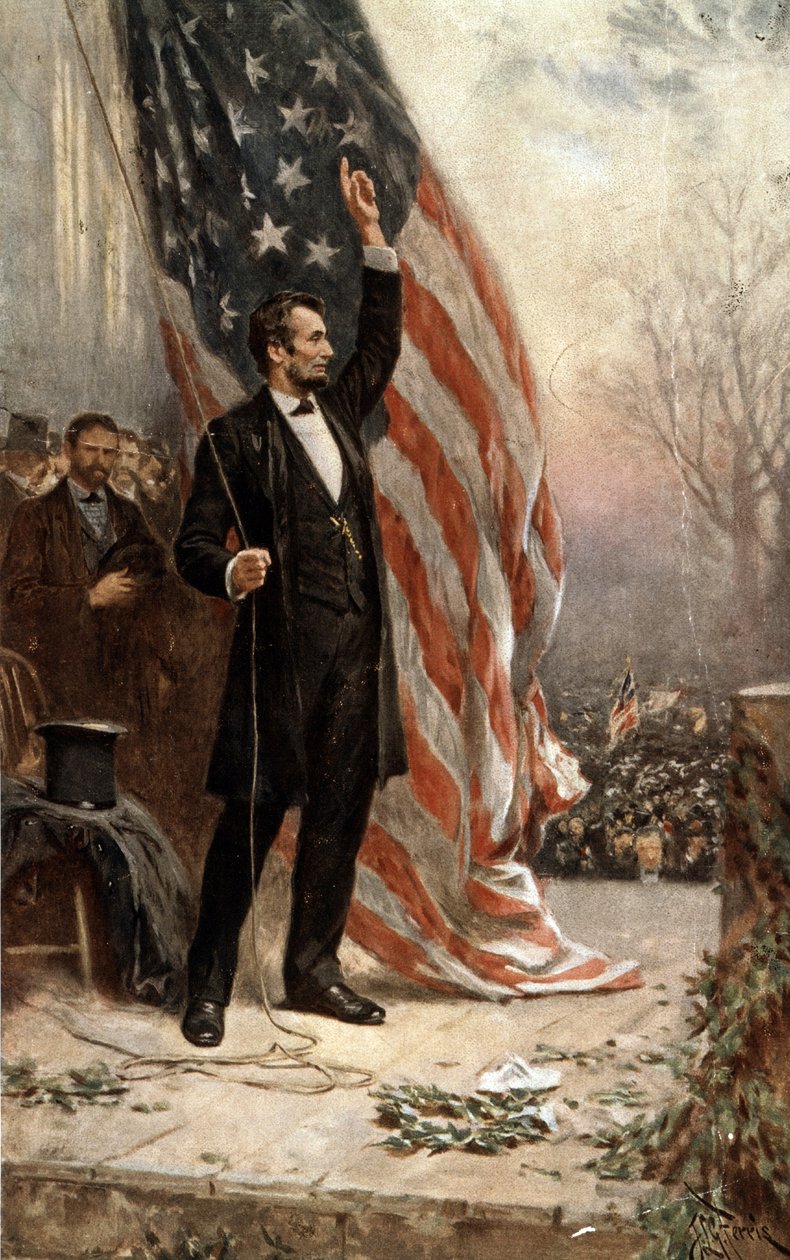
 My fellow Americans, I stand before you today as Abraham Lincoln, compelled by conscience to speak truth to a nation at the crossroads of its moral destiny. I come with a message that burns in my heart: slavery is wrong, and it must end.

When I was a young man in Illinois, I witnessed something that seared itself into my memory forever. I saw human beings—men, women, and children—shackled together like cattle, being driven to market. The sight of those chains, the sound of weeping mothers separated from their babies, the hollow despair in those eyes—it awakened something in my soul that has never slept since. I knew then, as I know now, that if slavery is not wrong, nothing is wrong.

Let me speak plainly about what slavery truly is. It is not merely an economic system—it is the systematic denial of human dignity. It is the declaration that one human being can own another as completely as he owns his horse or his plow. It is the assertion that the color of a man's skin determines whether he has a soul worth saving.

I have heard the arguments of those who defend this institution. They tell us it is ordained by God, necessary for our prosperity. But I ask you: can the God who created all men in His image have intended for some to live in chains? Can the same divine hand that wrote "all men are created equal" have meant to exclude four million souls from that sacred promise?

The defenders of slavery speak of property rights and constitutional protections. But what of the slave's right to his own body, his own labor, his own children? How can we speak of liberty while denying it to millions? How can we praise freedom while perpetuating bondage?

My friends, this nation was conceived in liberty and dedicated to the proposition that all men are created equal. We cannot survive as a house divided against itself—half slave and half free. We must place slavery where our founding fathers placed it—in the course of ultimate extinction. We must stop its spread and cease treating it as a positive good.

Abraham Lincoln: American prophet | The New Criterion

To those who profit from human bondage, I say: true prosperity comes not from the forced labor of the oppressed, but from the free labor of free men. The genius of America lies not in our ability to exploit the weak, but in our capacity to lift up the downtrodden.

The black man has the same right to earn his bread by the sweat of his brow as any white man. He has the same right to life, liberty, and the pursuit of happiness that we claim for ourselves. I am not asking you to make him your social equal—I am asking you to recognize his humanity and acknowledge his God-given rights.

We stand at a moment of decision. We can choose to be the generation that finally embraces the promise of our founding documents. We can prove that a nation conceived in liberty can secure liberty for all its people. Or we can perpetuate this stain upon our national honor and pass this moral crisis to our children.

I believe the American people, when they hear the call of conscience, will choose righteousness. I have faith that right makes might, and in that faith, let us dare to do our duty as we understand it. Let us resolve that this nation shall have a new birth of freedom.

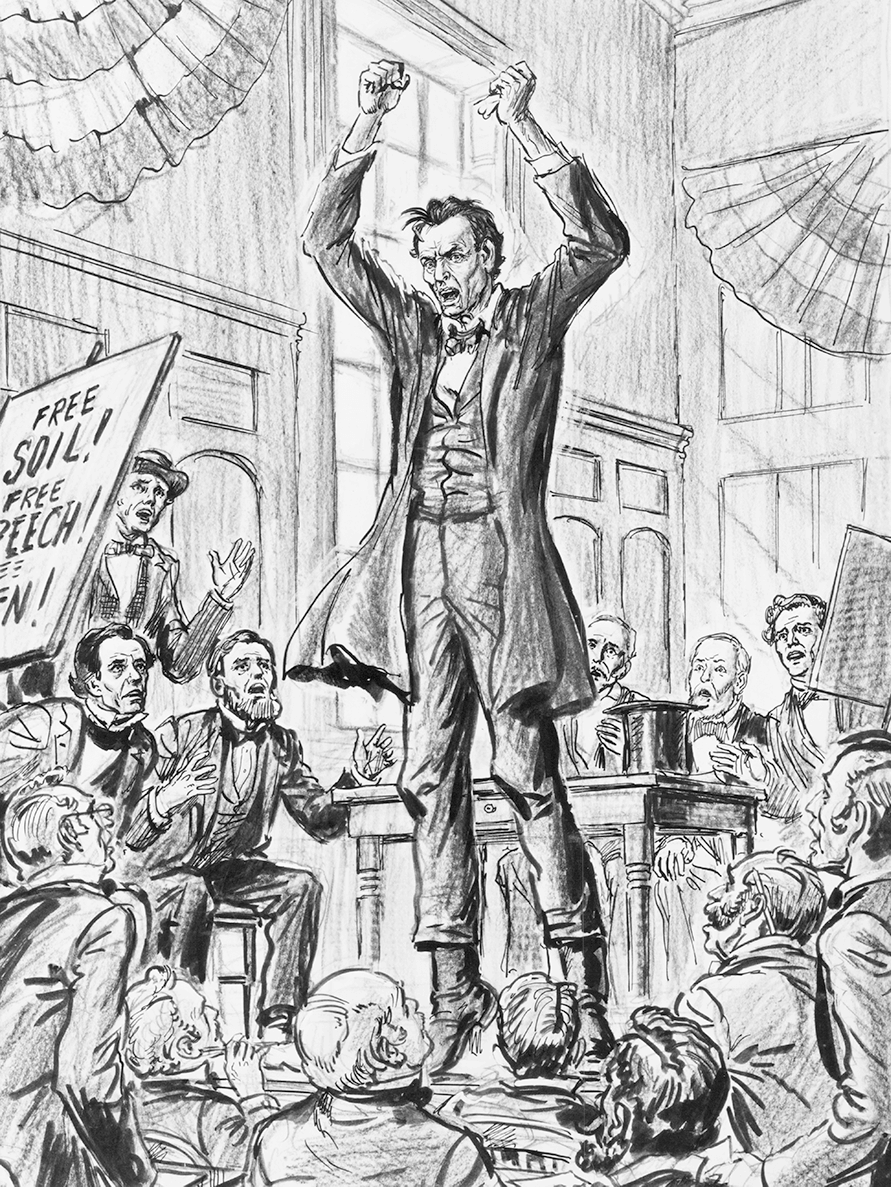
Lincoln's Lost Speech

The time for half-measures is over. The time for moral courage is now. Stand with me, not for political advantage, but for the cause of human freedom. Stand with me, not because it is easy, but because it is right. Stand with me, and let us together consign slavery to the dustbin of history where it belongs.

The future is watching. Our children are watching. God Himself is watching. Let us be the generation that chose freedom over bondage, righteousness over profit, and human dignity over human degradation.

Thank you, and may God bless this great nation as we strive to make it truly great—great in its commitment to the proposition that all men are created equal in the sight of our Creator.


Thursday, July 3, 2025

How the Bible Condones Slavery


Religion and Slavery: Historical Perspectives and Moral Contradictions

Introduction: The Fundamental Paradox

The relationship between religion and slavery represents one of history's most complex moral contradictions. Sacred texts that proclaimed human dignity were simultaneously used to justify human bondage. Rather than serving as early abolitionists, most major world religions initially accommodated slavery and provided theological frameworks that legitimized the practice for economic prosperity.

How to Read the Bible, Part 3: The Bible's Center is Jesus Christ - C.S.  Lewis Institute
the Bible and Cross

Old Testament Perspectives on Slavery

Legal Framework and Regulations

The Hebrew Bible contains explicit provisions for slavery across multiple books. Key passages include:

  • Leviticus 25:44-46: Permits purchasing slaves from neighboring nations and treating them as inheritable property
  • Exodus 21:2-6: Establishes regulations for Hebrew servants, including provisions for permanent bondage
  • Deuteronomy 15:12-18: Outlines the six-year service period for Hebrew slaves while providing mechanisms for voluntary permanent servitude

Moral Contradictions in Sacred Law

The Ten Commandments present conflicting messages about slavery. While prohibiting coveting another's slave, they also mandate that slaves observe the Sabbath rest alongside their masters. This creates a theological tension between acknowledging slaves as property while recognizing their humanity through religious observance.

New Testament Attitudes Toward Slavery

Institutional Acceptance with Humanitarian Concerns

The New Testament maintains acceptance of slavery while advocating for humane treatment rather than abolition:

  • Paul's Letter to Philemon: Requests kind treatment of the runaway slave Onesimus without challenging the fundamental system
  • Ephesians 6:5 and Colossians 3:22: Explicitly instruct slaves to obey their masters
  • 1 Timothy 6:1-2: Warns against slaves showing disrespect to believing masters

Jesus and Slavery Metaphors

Jesus incorporated slavery metaphors into his parables without condemning the practice, reflecting how religious teachings often emerged from and adapted to prevailing social conditions rather than challenging fundamental economic systems.

Historical Context and Social Adaptation

Economic and Social Realities

Biblical authors wrote within societies where slavery was both economically essential and legally established. Complete abolition was practically inconceivable within these contexts, leading religious texts to regulate rather than eliminate the institution.

Prioritizing Stability Over Freedom

The biblical record demonstrates that Scripture consistently treated slavery as a divinely regulated institution that could be practiced ethically within proper boundaries, rather than condemning it as fundamentally incompatible with human dignity.

Conclusion: Religious Authority and Moral Compromise

The accommodation of slavery within sacred texts reveals that even humanity's most revered moral authorities have historically prioritized social stability and economic systems over the absolute freedom and equality that many believers today consider fundamental to their faith. This pattern illustrates how religious institutions often reflected rather than challenged the social norms of their time.

How We Got Our Bible: Inspiration - RYAN LEASURE

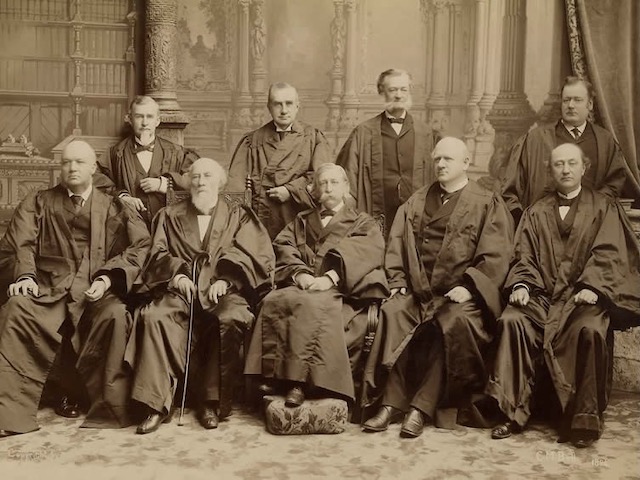
History of the Supreme Court

The US Supreme Court: Structure and Process


Global Standing and Unique Authority

The United States Supreme Court serves as the ultimate model for courts worldwide. What distinguishes the US Supreme Court from all other judicial systems is its power of Judicial Review. This authority grants the Court the highest power among all three branches of government, enabling it to check both the executive and legislative branches to ensure they operate within constitutional bounds.

The Court as a "Storm Center"

Case Volume and Selection Process

The Supreme Court operates as what many describe as a "storm center" of American jurisprudence. The Court faces an overwhelming caseload:

  • Over 7,000 cases are brought before the Court annually
  • Nine justices participate in the screening process
  • Only cases of grave constitutional matter are selected for full review

Rigorous Selection Criteria

The justices employ strict standards when determining which cases warrant the Court's attention, focusing on those that will have the most significant impact on American law and society.

Internal Working Process

Personal Responsibility and Independence

The justices maintain a strict policy of personal involvement in their work:

  • Individual review: Each justice personally examines all cases during the screening process
  • No delegation: The justices alone handle all aspects of case analysis and decision-making
  • Collaborative deliberation: While working independently, they engage in collective discussion and debate

Decision-Making Process

Once a case is selected, the Court follows a meticulous process:

  • Multiple revisions: Decisions often undergo 10 or more revisions before finalization
  • Consensus building: All justices must reach agreement on the final ruling
  • Thorough documentation: The reasoning behind each decision is carefully recorded

Public Communication and Authority

Release Process

When the Court reaches a decision, it follows a structured communication process:

  • Comprehensive documentation: Justices compile detailed written opinions explaining their reasoning
  • Public information officer: Handles the distribution of decisions to ensure accurate reporting
  • Press release: Decisions are formally announced to the media and public

Public Trust and Compliance

The American people consistently respect and follow Supreme Court decisions due to the deep trust placed in the institution. This trust stems from the Court's rigorous process, constitutional authority, and historical role as the final arbiter of American law.

Final Post

Throughout my whole time here at Summer Advantage, to say it has been a ride would be an understatement. I was talking with my grandpa as so...