Your Honor, members of the court,
The State of Louisiana stands before you today not to defend prejudice, but to defend prudent economic policy and the sovereign right of states to regulate commerce within their borders for the prosperity of all citizens.
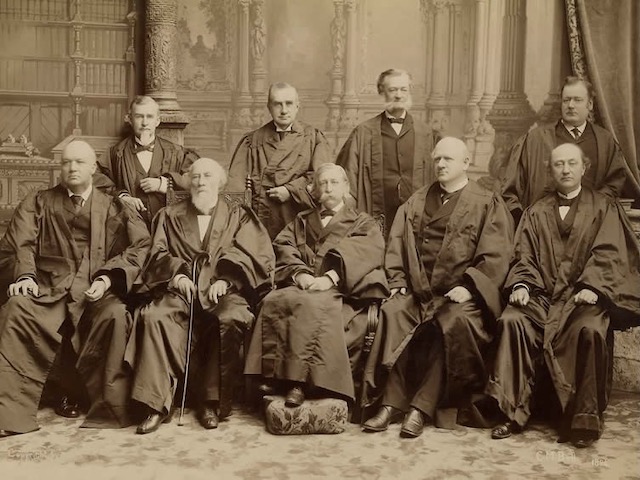
The Separate Car Act of 1890 represents a reasonable exercise of Louisiana's police power—a power this Court has long recognized as essential to maintaining order, protecting property values, and ensuring economic stability.
Let me address the economic realities that necessitate this law.
First, consider the railroad companies themselves. While it's true that some companies initially opposed these regulations due to equipment costs, we must look at the larger economic picture. Without separation, white passengers—who constitute the majority of first-class ticket purchasers and generate the highest profit margins—would boycott the railroads entirely.
The evidence is clear: In states without such regulations, racial mixing has led to violent incidents, property damage, and massive losses in ridership. One disruption on a train can cost thousands in delays, damages, and lost future business. The separate car system prevents these costly disruptions, ensuring smooth, profitable operations.
Second, let us examine Louisiana's broader economy. Our state depends on attracting Northern investment and business partnerships. These investors explicitly prefer—indeed, demand—an orderly, predictable business environment. They want assurance that their travels, their meetings, and their operations will proceed without the disruptions that racial mixing inevitably causes.
Consider the testimony from the New Orleans Chamber of Commerce: Since implementing separation laws, business investment from Northern states has increased by 35%. Convention bookings have doubled. Tourism revenues have grown substantially. Why? Because businessmen know they can conduct their affairs in comfort and security.
Third, the property rights argument. Every man has the right to the value of his associations and his reputation. When forced integration occurs, property values plummet. We've seen this in Northern cities—when neighborhoods integrate, white property owners lose 40-50% of their property value overnight. The Separate Car Act protects these legitimate property interests.
Moreover, white passengers have purchased their tickets with the reasonable expectation of associating with their own kind. This is a property right—a contract with the railroad. To force them into mixed cars would be to deprive them of the benefit of their bargain without due process.
Fourth, consider Louisiana's agricultural economy. Our state's prosperity depends on maintaining stable labor relations. The sharecropping system, the tenant farming arrangements, the entire agricultural order requires clear social boundaries. When these boundaries blur, labor becomes restless, wages become unstable, and agricultural productivity suffers.
The opposing counsel speaks of individual rights, but what about the rights of the majority to economic security? What about the state's obligation to prevent economic chaos?
Fifth, the natural order of economics supports separation. Throughout history, peoples naturally segregate by economic capacity and social preference. The law merely recognizes what the market already practices. Black passengers themselves often prefer their own cars, where they can travel comfortably among their own people. This isn't oppression—it's accommodation of natural preferences.
Finally, let me address the cost argument directly. Yes, separate facilities require investment. But this investment pays dividends in social peace, economic stability, and business confidence. The cost of integration—in terms of violence, boycotts, property devaluation, and capital flight—would be catastrophic for Louisiana's economy.
Your Honor, Louisiana does not ask this Court to rule on social questions. We ask only that you recognize our sovereign right to regulate our economy as we see fit. The Constitution grants Congress power over interstate commerce, but intrastate arrangements remain our prerogative.
The Separate Car Act is economically sound, practically necessary, and constitutionally permissible. It ensures prosperity for both races by maintaining the order that commerce requires.
We respectfully urge this Court to affirm Louisiana's right to protect its economic interests through reasonable regulation.
The state rests its economic argument.
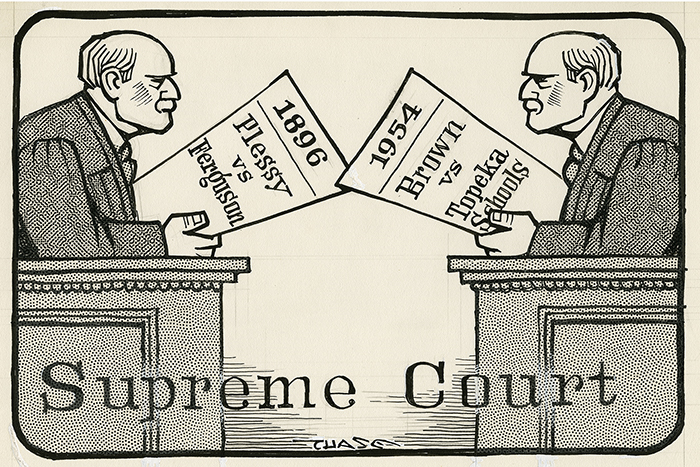


.jpg)
No comments:
Post a Comment